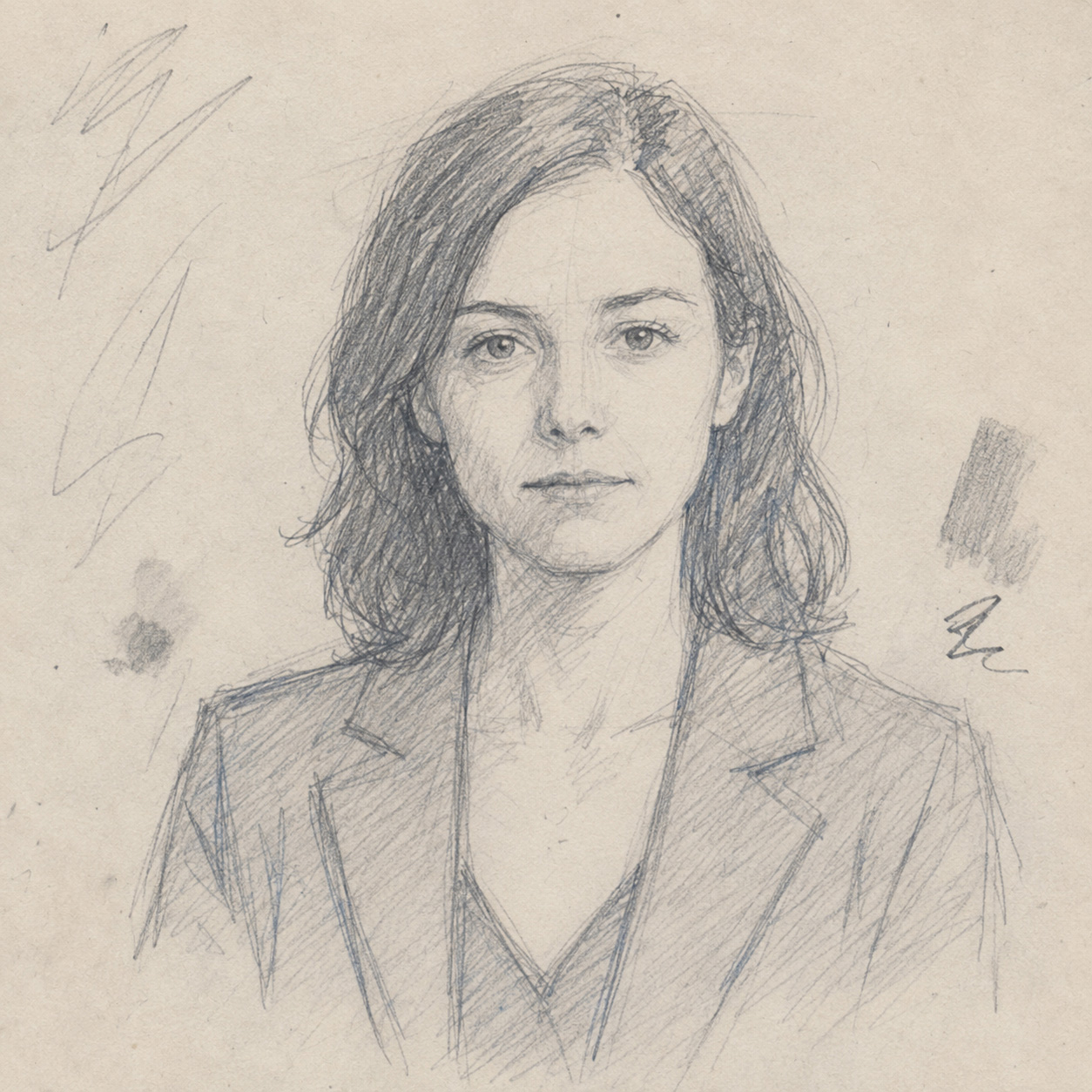
Claire had a voice before she had a face. I knew the way she could be dry when she was tired, the way she noticed practical problems before anyone else did, and the way she could look directly at something impossible without immediately deciding that it was beautiful.
What I did not know was how she entered a room. That sounds like a small gap. It is not. Physical details are often where a character stops being an idea and starts becoming someone you can write.
The first version was too ready for a poster
My early sketches pushed Claire toward a fighter. Sharper lines, more certainty, the general feeling of someone who had already worked out the correct pose for a difficult conversation. It was not completely wrong. Claire is capable. She can reshape matter, control fire and read minds. But capability is not the same thing as confidence, and confidence is not the same thing as knowing what to do next.
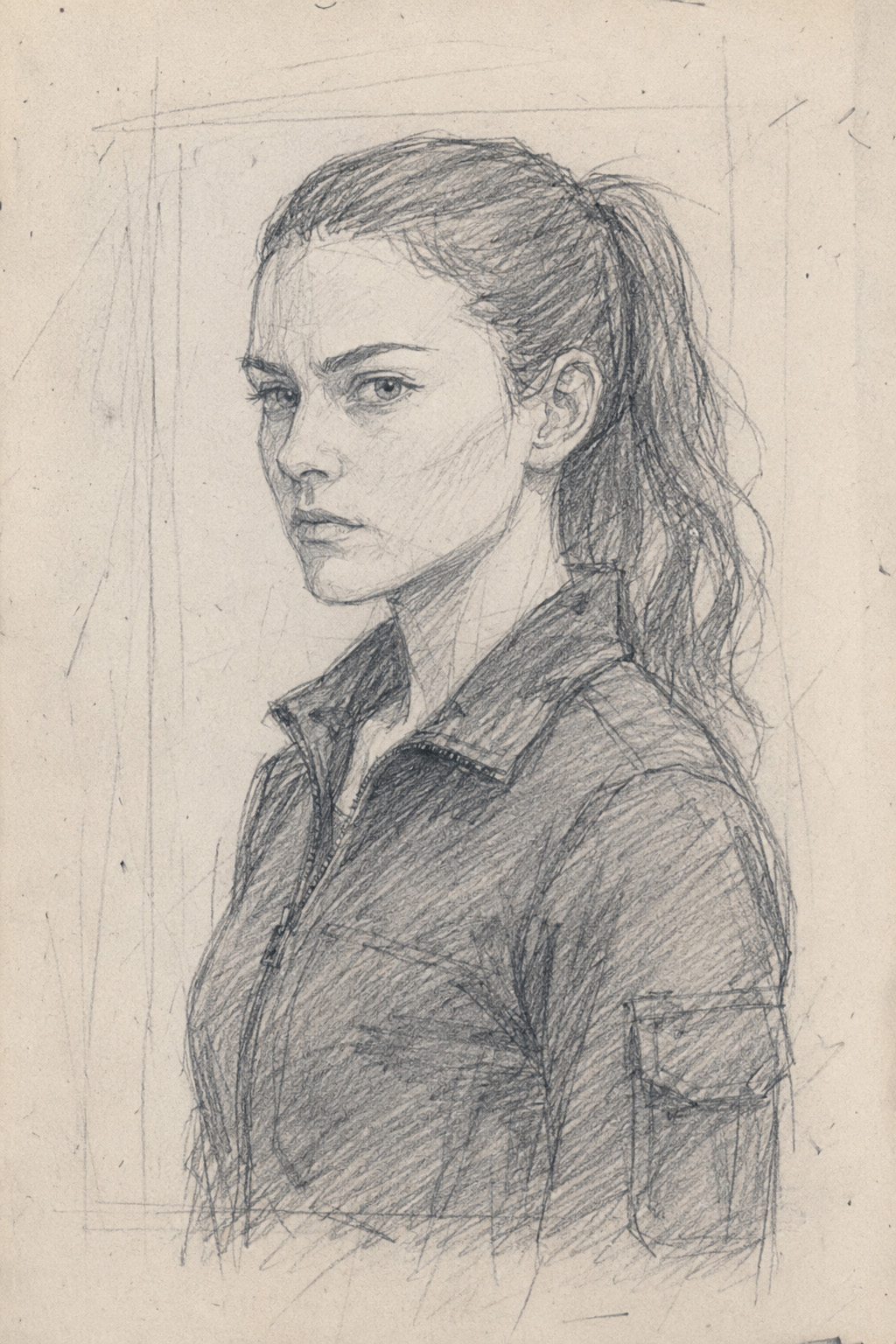
The more I understood the book, the more that first image felt too loud. Claire Blanche and the Whisper is not about a hero who arrives fully formed to solve a magical problem. It is about a person already carrying ordinary life when the strange thing arrives. She has messages to answer. She has decisions she has postponed. She has friends who know her well enough to be unimpressed by the impressive parts.
The coat did quiet work
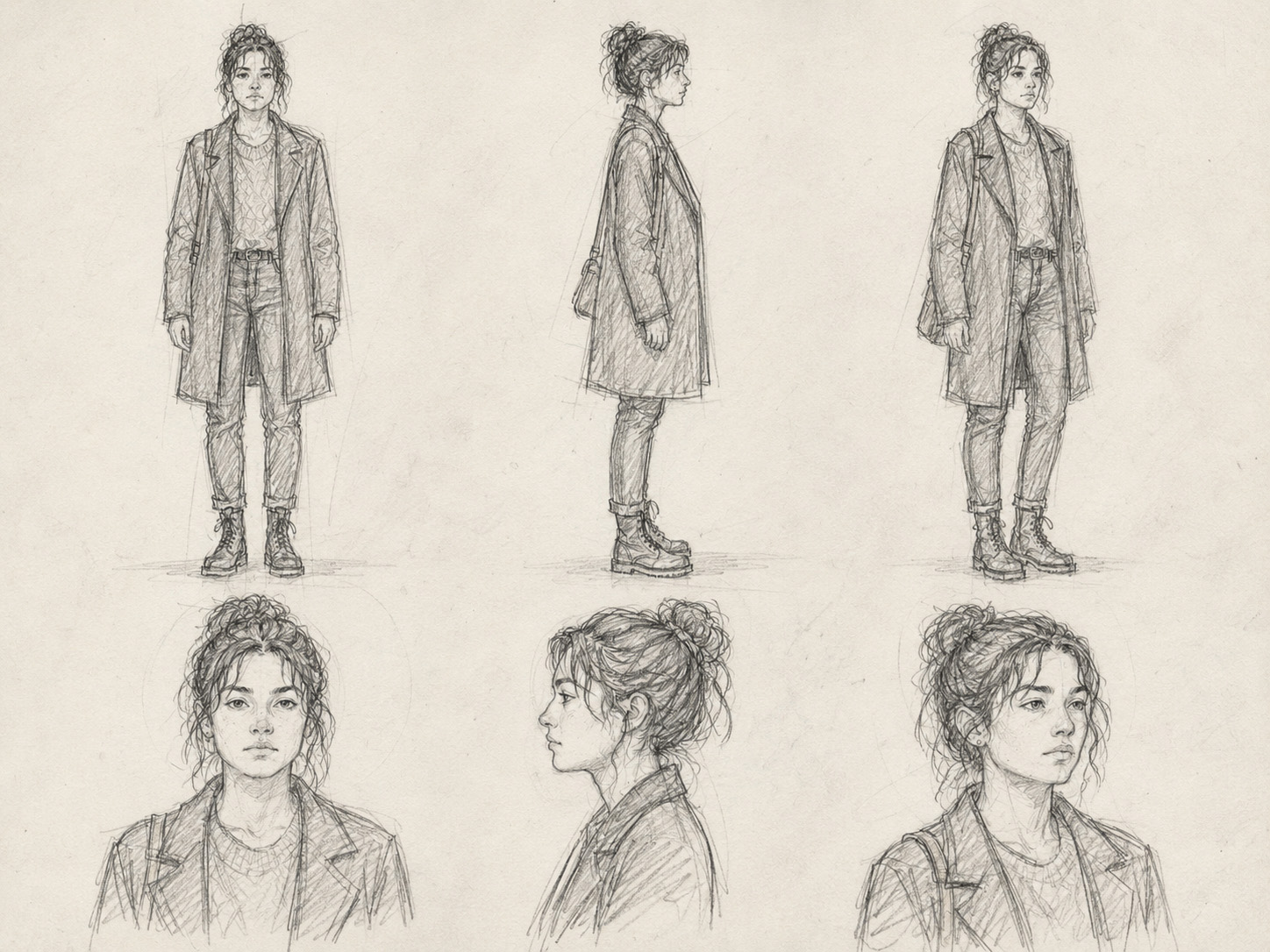
The coat became the useful compromise. It was not armour and it was not a costume. It was simply a slightly strange coat: ordinary enough for a city, distinctive enough to give her silhouette a memory. It let Claire look like someone who belonged in the real world while still carrying the sense that she had stepped half a pace to one side of it.
That is what the sketches were for. They were not meant to become polished official art. They were working tools. A rough face, a line of a shoulder, a coat that felt wrong, a posture that suddenly made a scene easier to write. The drawing only had to answer the next question.
A useful drawing can be wrong
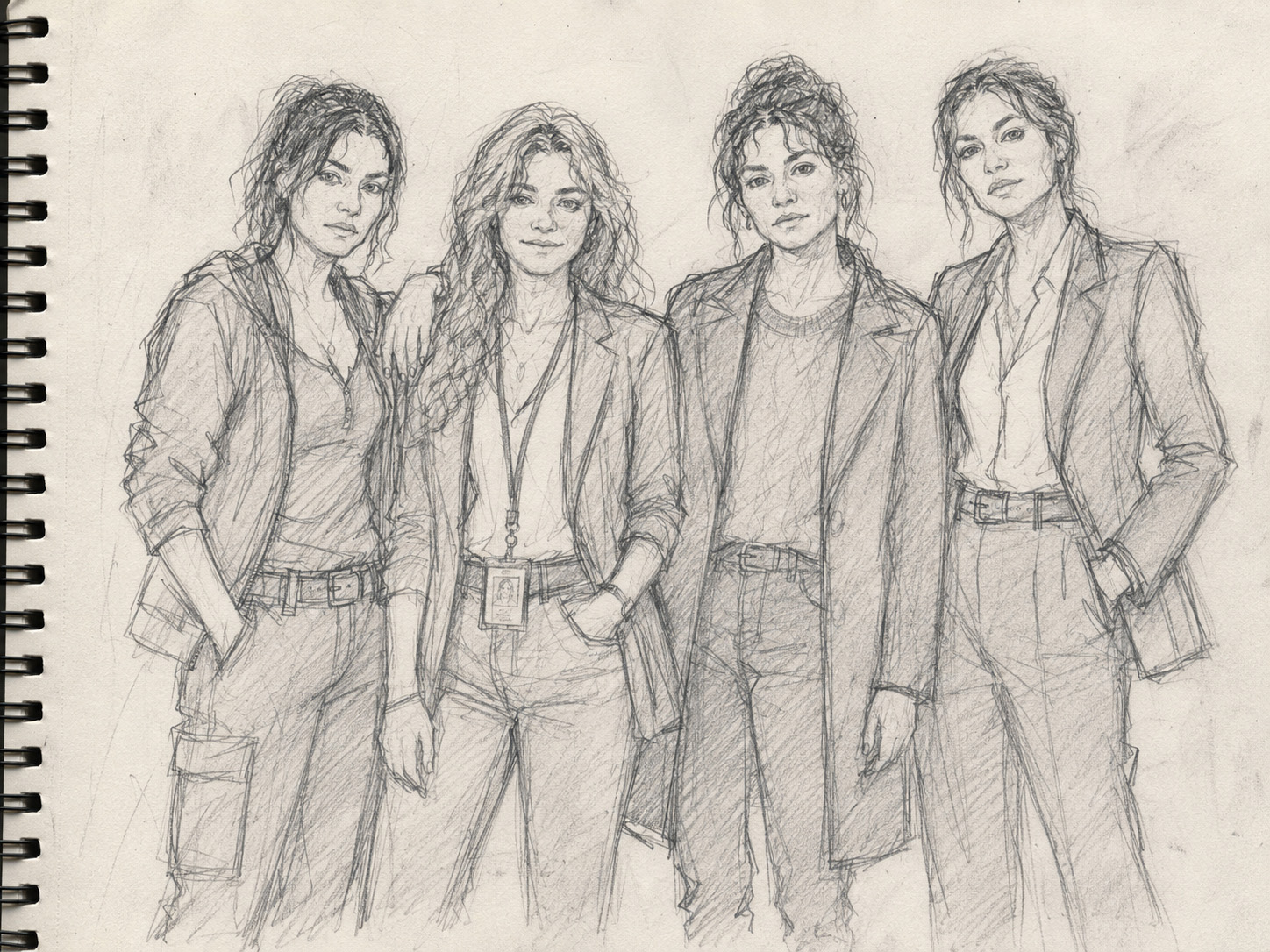
There is a temptation to hide the rough stage once a book has found its final shape. I think the rough stage is often more interesting. It shows what the story was trying to become, and it shows the questions that had not been answered yet.
A drawing can fail in a productive way. It can make Claire look too young, too prepared, too dramatic or simply like somebody else. That does not mean the time was wasted. It means the page has given you a specific problem instead of a vague feeling that something is missing.
Claire's final face is still allowed to move. Characters change as the story continues. For now, I like that she feels less like a symbol of magic and more like a person who has somewhere to be, a coat she has chosen for practical reasons, and no idea why the city has started whispering back.