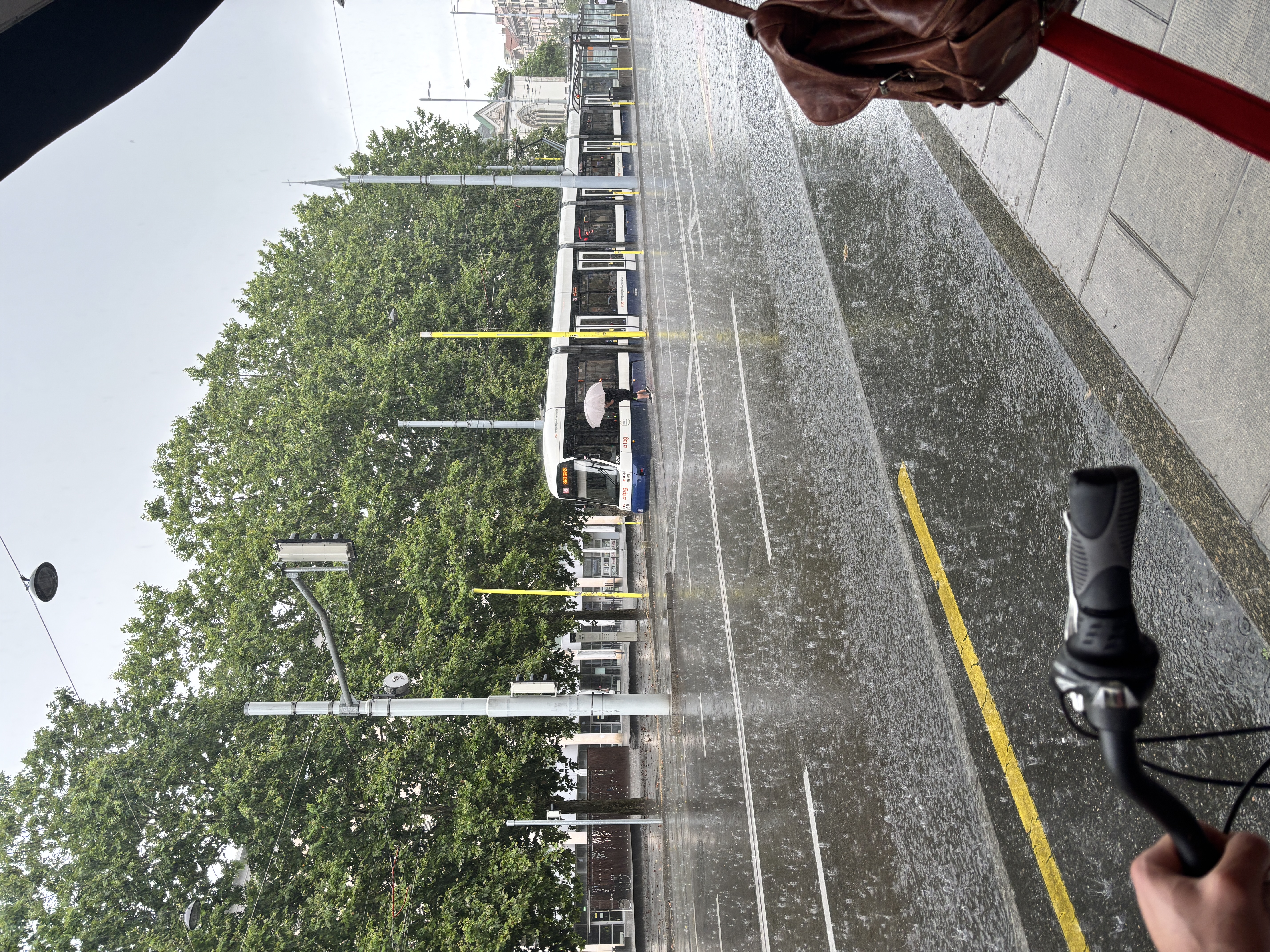
I do not usually begin with a landmark. Landmarks announce themselves too clearly. When I am looking for a place to put a scene, I am more interested in the things people stop noticing: the wire above a street, the light in a stairwell, the shop that is still open after the rain, the particular sound of a tram turning somewhere out of sight.
Geneva is useful to me because it can feel composed and unfinished at the same time. There is water, stone, traffic, old façades, new glass, quiet money, tired commuters and the weather changing its mind. None of that is magical. That is exactly why it works for a story about magic trying to remain unnoticed.
The city should not perform
In Claire Blanche and the Whisper, the supernatural does not need to decorate every surface. If every street glows and every doorway promises a secret, the reader stops believing in the ordinary world. I want the impossible to sit beside a normal inconvenience: a missed message, a wet sleeve, a late train, a coffee that has gone cold.
The city gives me a rhythm for that contrast. A character can have an argument beside the water while someone nearby is trying to keep a bicycle dry. A strange signal can pass through a building that still has a broken entry buzzer. The world does not pause to make the magic look important.
Collecting details instead of collecting views
When I walk with a story in mind, I keep a small list of details rather than trying to capture a complete impression. I write down the shape of a railing, the colour of a reflection, the distance between two lit windows, the way people behave when the pavement is slippery. These notes are more useful later than “beautiful street” ever is.
A good setting detail does at least two jobs. It locates the scene, but it also tells me something about the person looking at it. Claire notices systems and interruptions. Jules notices warmth. Other characters notice exits, noise or who has been left out of the conversation. The same street becomes a different place depending on who is carrying it.
Water, weather and the hidden signal
Water keeps returning in my notes because it changes the city without rebuilding it. Rain turns pavement into a second sky. The river carries reflections that look briefly like messages. A lake can make a city feel open and enclosed at the same time. Weather gives a scene movement even when the characters are standing still.
That became part of the atmosphere around the Whisper. Not a glowing phenomenon waiting in the clouds, but something more difficult to separate from normal interference: a pattern in the noise, a pull beneath an ordinary evening, a sense that the city has registered something before the people in it have.
I want the reader to be able to look at a wet street and imagine nothing unusual. Then, a few pages later, to wonder whether the street was ever as empty as it seemed.
Read Daily Mishaps: seven fictional disasters built from real Geneva details →