How the Claire Blanche Characters Found Their Faces
The characters already had personalities on the page. The sketches were a way to see them better, to write them more naturally, and to understand how they might stand, smile, argue, or disappear into a strange room.
Published
When the first short stories around Claire Blanche started becoming a book, the characters already had voices. They had habits, reactions, fears, jokes, friendships, and the small contradictions that make fictional people feel alive. What they did not always have was a clear face.
That became a problem during writing. Not a dramatic problem, but a practical one. When a character exists only as an idea, it is easy to lose tiny physical details. How do they enter a room? How do they look when they are tired? Are they guarded, relaxed, restless, amused? A face helps answer those questions before the sentence arrives.
The sketches were never meant to become polished official art. They were working tools. They helped the author incorporate the characters more easily while writing, almost like having them nearby. The drawings were imperfect, sometimes funny, sometimes wrong, but they made the people in the story easier to hold in the imagination.
Starting from personality, then looking for the face
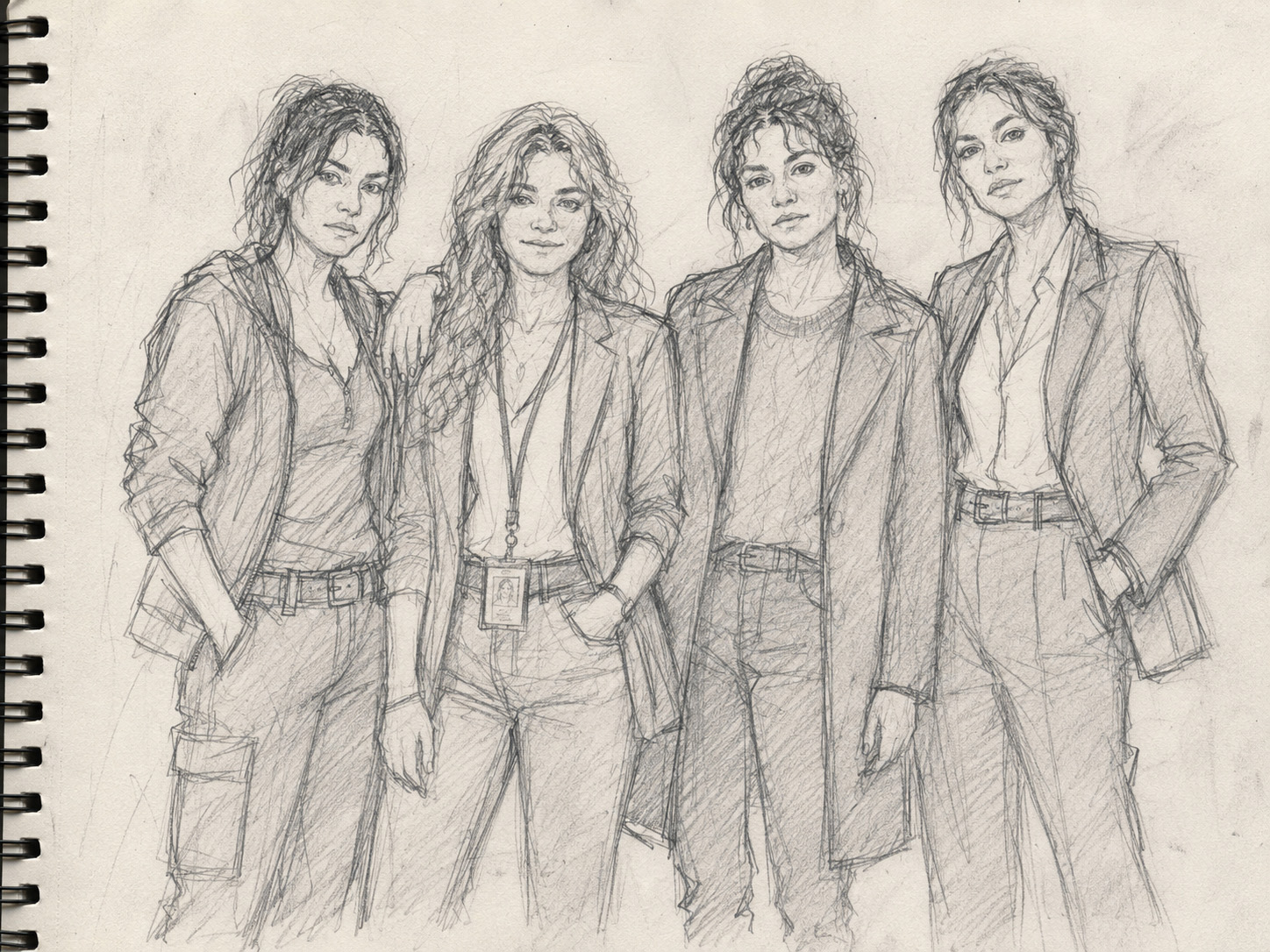
The characters did not begin with drawings. They began with personality. Claire had her dry intelligence and her strange kind of distance. Aly had a different energy. The others had their places in the group, their own emotional weight, and their own function inside Claire's world.
The drawings came later, almost as a translation exercise. The question was not "How do I make a beautiful picture?" It was "What face would make this person easier to write?" That is a different kind of drawing. It is less about talent and more about contact.
There is also honesty in the limits of the sketches. Besides Aly, the other three girls sometimes look too similar. That was not a secret artistic choice. It happened because the author was trying to draw enough to understand them, not because he had the skill to give each one a perfectly distinct visual identity from the beginning.
But even that limitation was useful. It showed what still needed to be discovered. A drawing can fail in a helpful way. It can say: this is not quite her yet. Try again.
Claire changed the most
Claire's visual evolution was the clearest. At first, she leaned more toward the image of a fighter: sharper, more guarded, almost as if the outside of her needed to announce strength before the story could prove it.
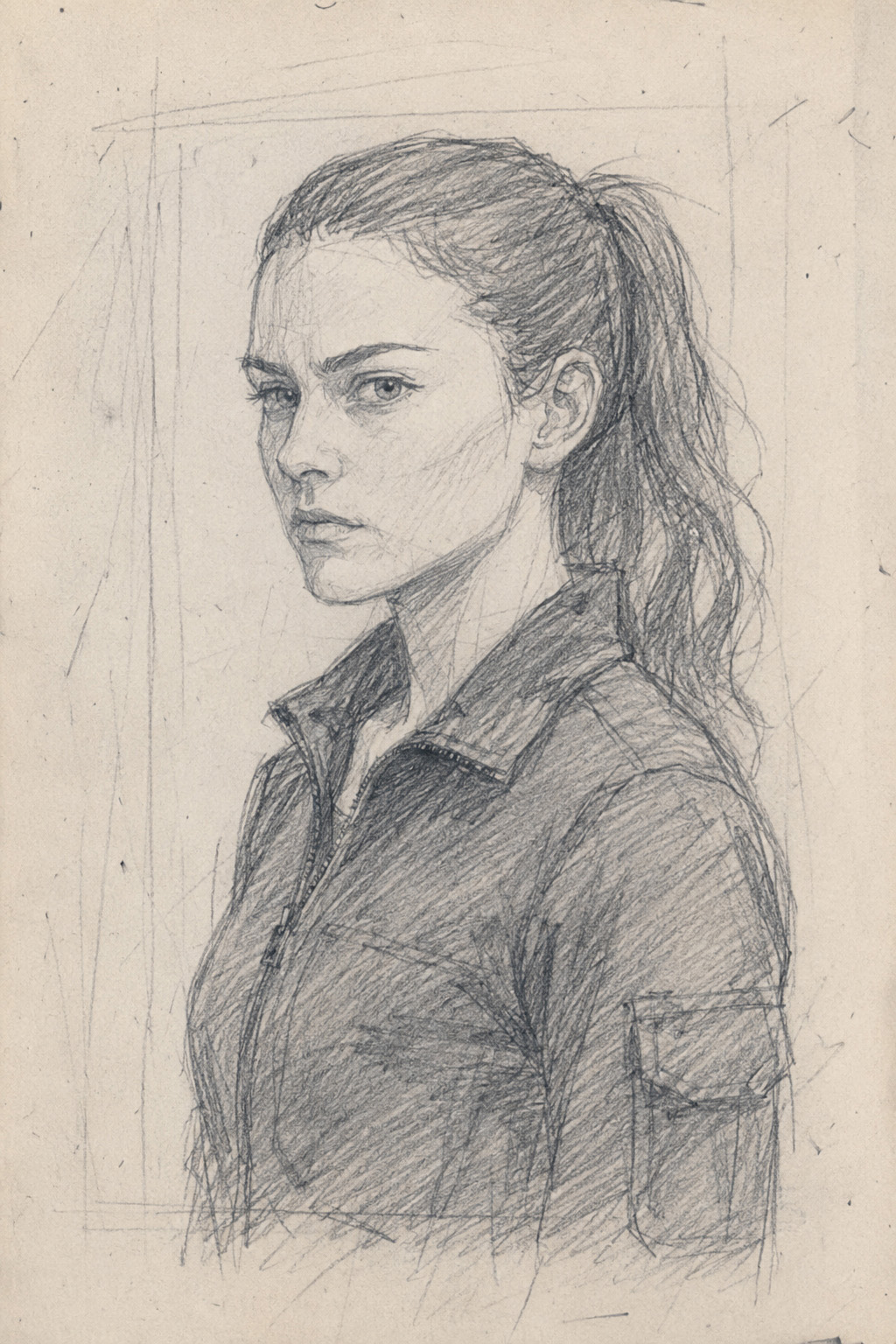
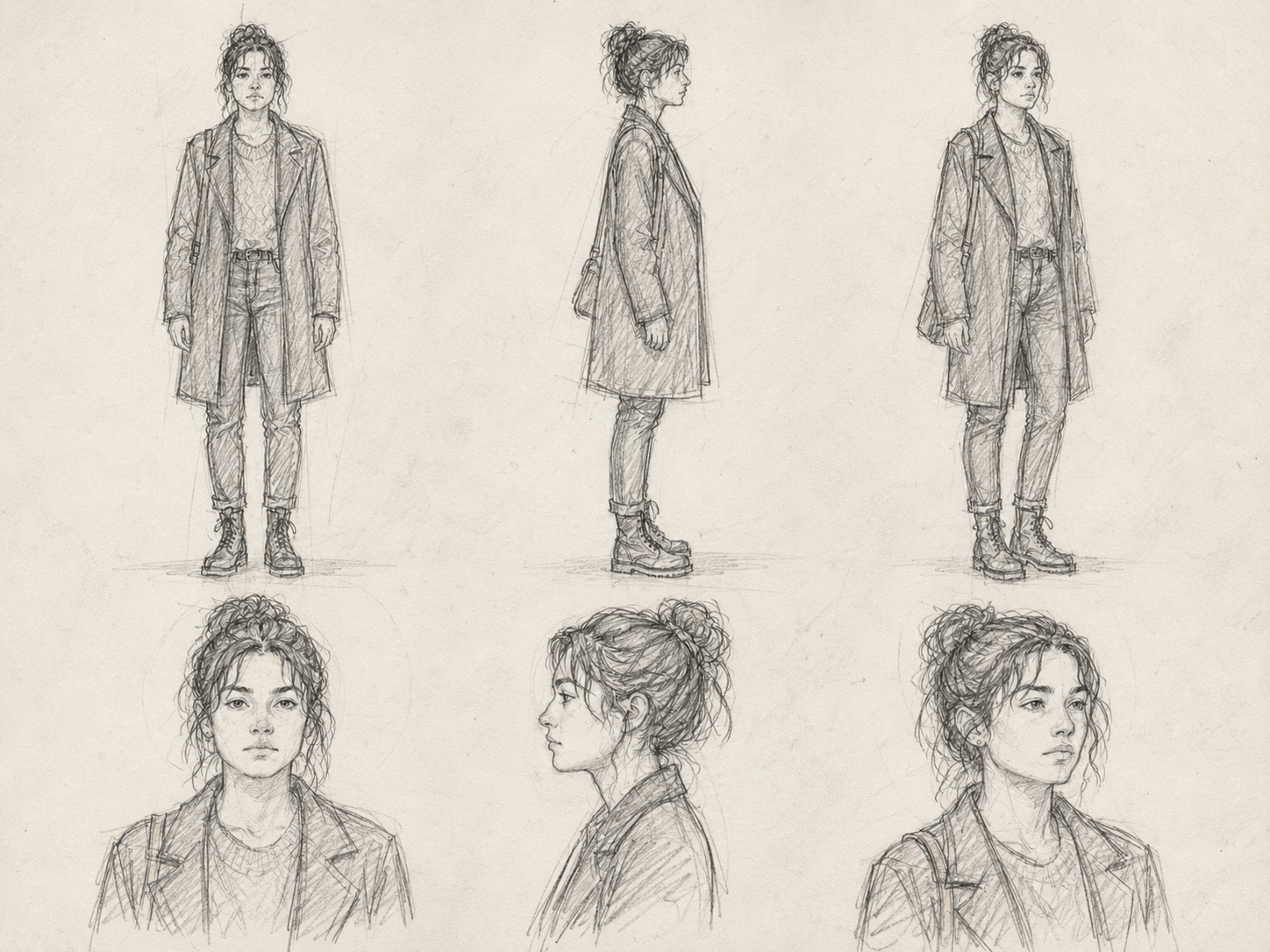
Over time, that changed. The more the book found its tone, the more Claire became less like a heroic poster and more like a regular woman caught in something strange. That mattered. The book was not asking her to look like someone who had already solved the world. It needed her to feel like a person who could be tired, skeptical, funny, practical, and still pulled into things bigger than herself.
The coat became important. Not a fantasy armor. Not a superhero costume. Just a strange coat. Something ordinary enough to wear in the real world, but distinctive enough to make Claire feel slightly out of place wherever she stood. That was closer to the book: modern, grounded, and quietly strange.
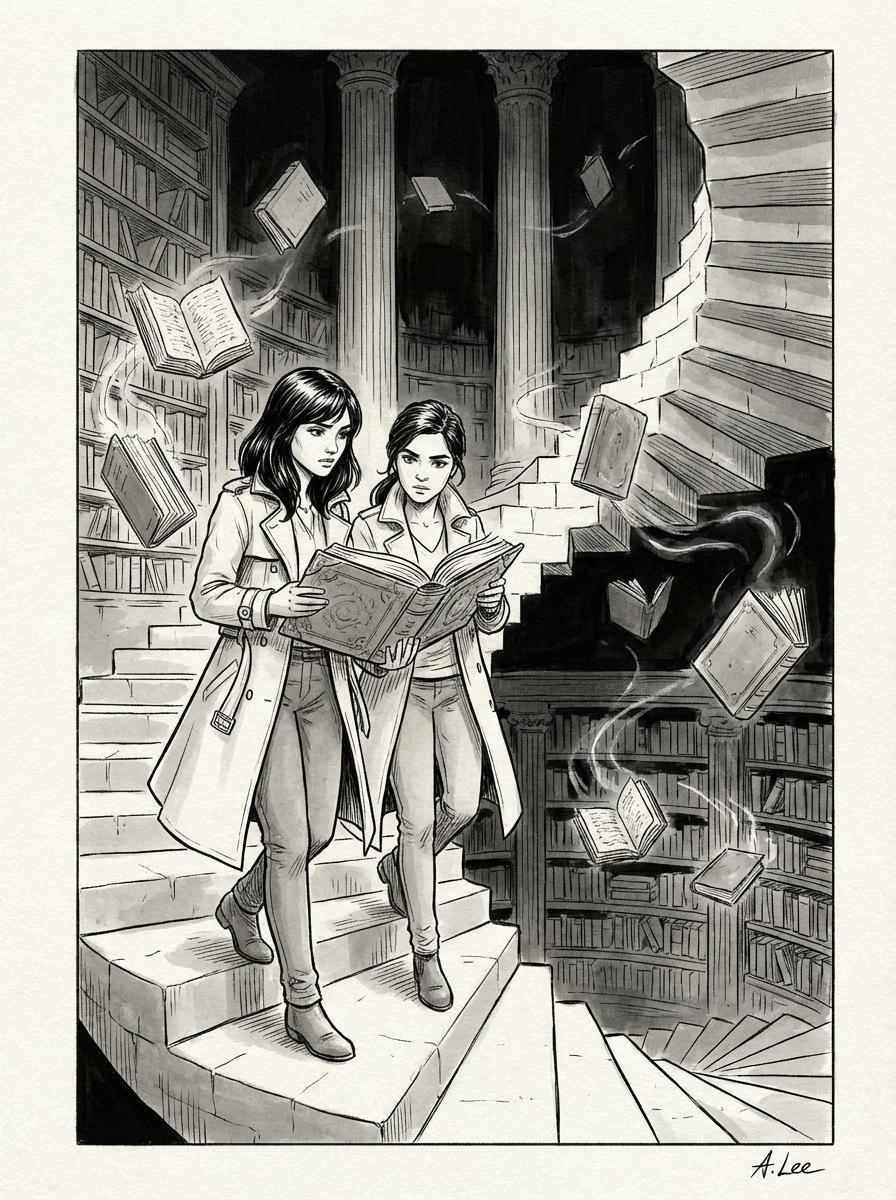
The library drawing that looked too young
At one point, the author asked a friend to draw the Library. The idea was right: books, stairs, motion, mystery, the feeling that knowledge is not sitting still. But when the image arrived, both agreed that the characters looked too much like teenagers.
That was not a failure. It was part of finding the tone. Claire Blanche & The Whisper is not a school fantasy, and Claire's world is not meant to feel like a young-adult adventure where everyone is discovering magic for the first time. The characters needed more adult weight. They needed the look of people who had lived a little, made mistakes, worked, lost time, and carried private histories.
Finding Jules
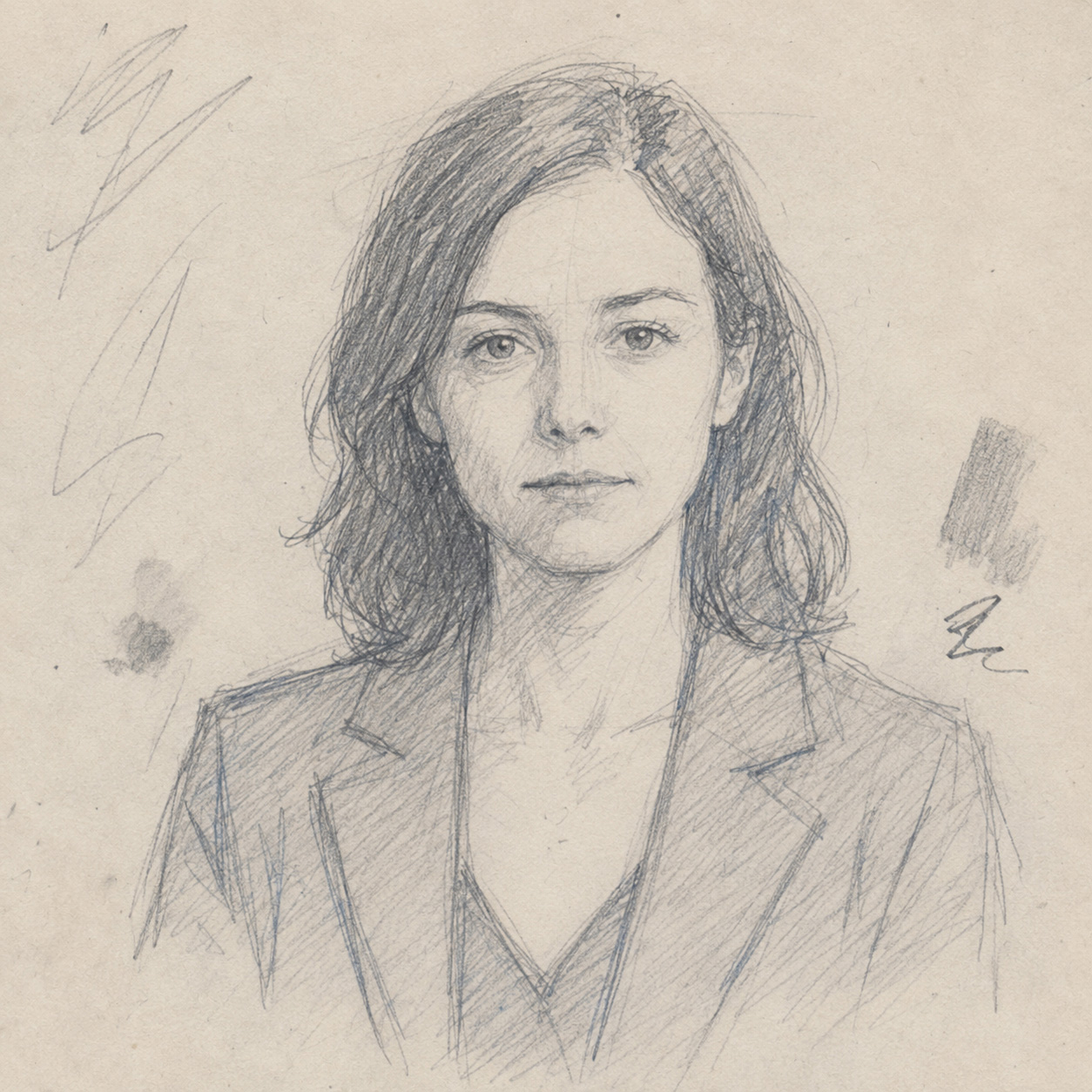
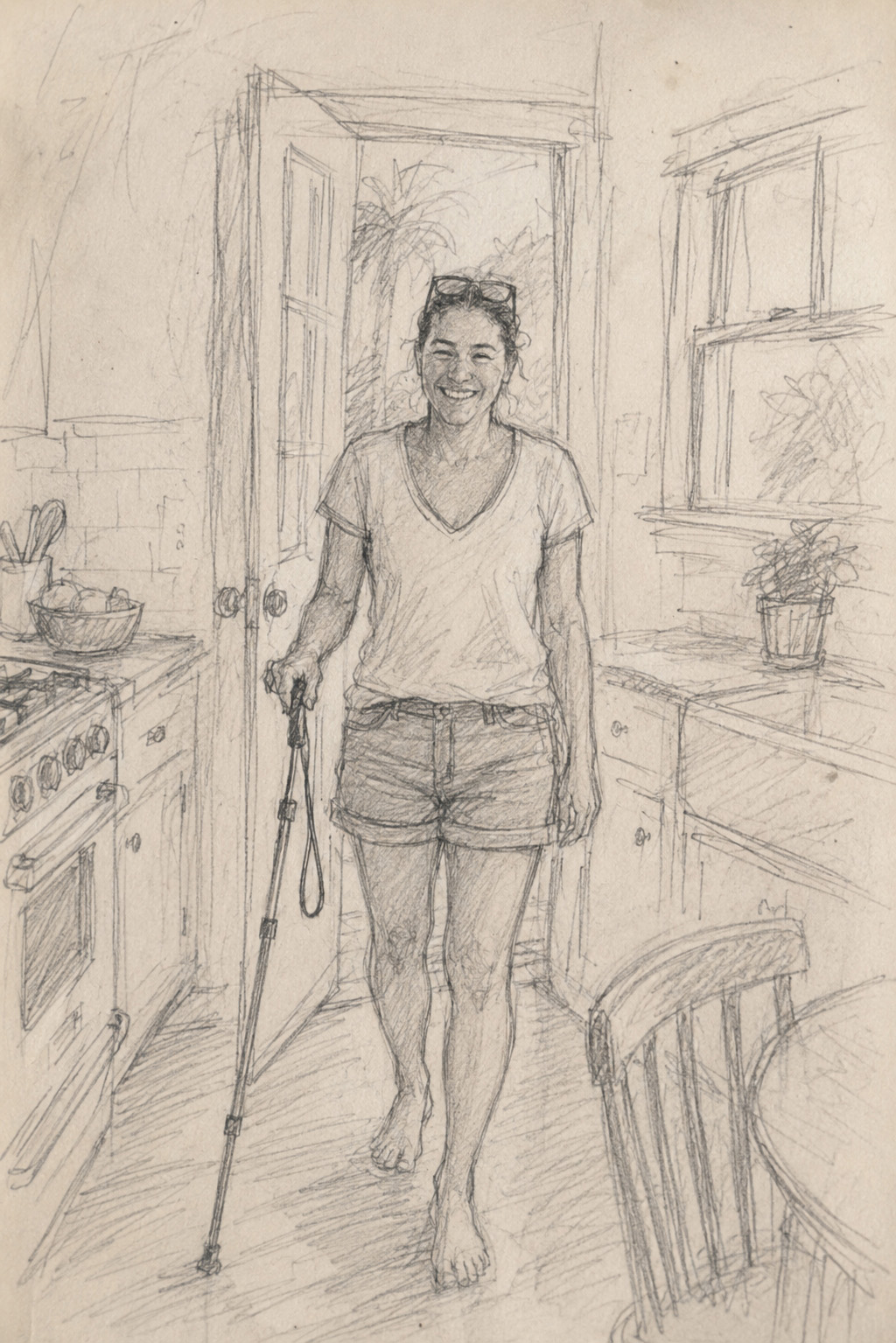
Jules came from a different kind of question. Someone asked the author what Jules looked like, and that question forced an answer. It is one thing to know a character in motion. It is another thing to stop and say: this is her face.
The Jules sketch was made as a response to that curiosity. It was not about defining every detail forever. It was about giving readers, and the author, a first visual anchor. Jules needed warmth, a human looseness, and the sense that she belongs to ordinary life even when Claire's world becomes increasingly strange.
Why sketches matter even when they are imperfect
These drawings are not museum pieces. They are part of the creative process. They show a book being searched for, not simply presented after everything was solved.
That is why they matter. A character can have a personality before she has a face. A place can have magic before its people look right inside it. A team can exist emotionally before every visual difference is clear. The sketches sit in that middle space, between imagination and finished story.
For Claire, the process moved from fighter to ordinary woman in a strange coat. For the group, it moved from rough similarity toward clearer energy. For Jules, it moved from a question to a drawing. For the Library, it revealed what the book was not: not too young, not too polished, not a teenage adventure, but a modern fantasy about adults standing beside impossible things.
The final versions of these characters may keep evolving. That is part of a series. The first book opens the door, but the visual world can keep growing with the story. The sketches are the first footprints.